
A single missed AM and PM can turn a routine task into a risky one. That is why hospital staff and airline crews rely on the 24-hour clock every day. A military time converter removes the guesswork in seconds. It helps nurses, pilots, and dispatchers read schedules the same way. In this guide, you will see exactly where these tools matter most. You will also learn simple conversion rules you can use today. Let's step into the world of precise timekeeping.
Military Time in Hospitals: Why Healthcare Prefers the 24-Hour Clock
Hospitals use military time to record medical information, schedule surgeries, and manage shift changes. One continuous sequence from 0000 to 2359 leaves no room for AM and PM mix-ups. A time conversion tool helps staff who grew up with the 12-hour clock read charts confidently. Clear patient care begins with clear timestamps. Staff quickly learn that 1300 simply means 1 PM.
How Pilots Use 24-Hour Time to Avoid Costly Mistakes
Aviation depends on flight schedules that cross many time zones. A 24-hour format keeps departure and arrival times unambiguous, even during international travel. Flight crews read clearances, weather reports, and logs in this style, and aircraft communication stays consistent. When someone needs a quick check, a converter confirms the number before anyone acts on it.
Military Time Converters for Nurses: Quick Shift and Medication Checks
Busy wards mean handovers, rounds, and medication administration under pressure. A converter lets staff confirm that 1900 means 7 PM before charting a dose. It also speeds up hospital shift schedule planning for night teams. Quick conversions save mental effort, and saved effort means fewer slips when the ward gets hectic. Even experienced staff benefit when a long shift blurs the hours.
Zulu Time Explained: The Aviation Clock Every Pilot Follows
Aviation commonly uses UTC and Zulu time, a single worldwide reference written in 24-hour format. A flight leaving one country and landing in another still shares one clock for planning. That supports air traffic control coordination. Converters translate between local time and Zulu, so crews know exactly when to expect arrivals. That shared reference prevents mix-ups between departure and arrival cities.
Medication Schedules and 24-Hour Time: Where Errors Hide
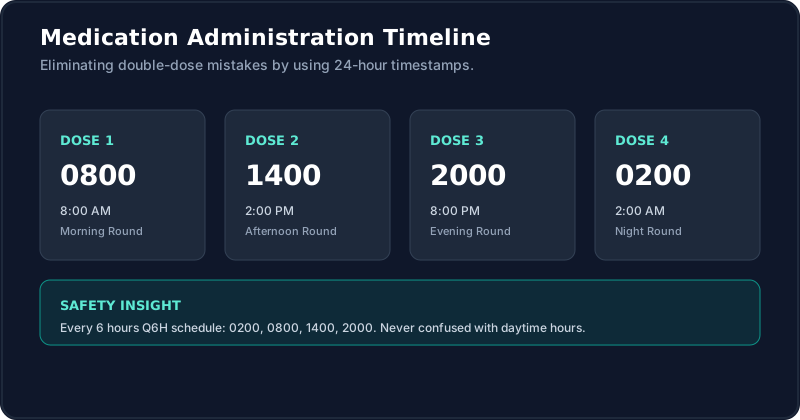
Medication times are where small confusion causes big trouble. A dose due at 0800 is clear, but "8 o'clock" could mean morning or evening. Writing dose timing in 24-hour form removes that doubt. Converters help caregivers at home too, because medication timing instructions often arrive in mixed formats. Always confirm unclear instructions with a pharmacist or nurse before acting.
Quick Military Time Conversion Chart
| Standard time | Military time | Typical use |
|---|---|---|
| 12:00 AM | 0000 | Start of the day, night shift |
| 6:00 AM | 0600 | Early rounds, morning flights |
| 1:00 PM | 1300 | Afternoon surgery, departures |
| 6:00 PM | 1800 | Evening shift change |
| 11:59 PM | 2359 | Last minute of the day |
Flight Logs, ATC, and UTC: Where Time Converters Help Most
Converters earn their place in three spots: the pilot logbook, flight planning, and controller communication. Logbooks need exact entries, planners juggle flight departure time across regions, and controllers need unmistakable timestamps. When minutes decide safety, a quick conversion beats mental maths. Keep one handy, but still double-check critical numbers.

Converting 12-Hour to 24-Hour Time: Simple Rules and Examples
The rules are easy. From midnight to noon, the numbers stay the same: 9:00 AM becomes 0900. After noon, add 12 to PM hours, so 3:00 PM becomes 1500. To go backwards, subtract 12 from the hour: 2200 is 10:00 PM. Midnight is 0000 and noon is 1200. Skip the colon, and always keep four digits.
Why Emergency Rooms Depend on 24-Hour Timestamps
In an emergency, minutes matter. Teams log arrival, tests, and treatment using emergency room logging that must be sequential and unambiguous. EMS timestamps and ambulance dispatch records use the same style, so every unit tells one story. A converter helps new staff and visiting responders read times correctly under stress. Accurate order matters when reviewing what happened and when.
Free Military Time Converters: Which Ones Work for Clinics and Cockpits?
Choose a free military time converter that works both ways, handling 12-hour to 24-hour and back. It should be quick, readable on a phone, and free of clutter. Test it with noon, midnight, and 2359 before trusting it. Never rely on one tool alone for critical decisions; confirm with a second check.
Common 24-Hour Time Mistakes in Healthcare and Aviation
Typical slips include reading 0000 and 1200 backwards, forgetting the 12-hour subtraction, and mixing local time with UTC. Another is writing colons into a four-digit style. These errors are small but costly. Training, simple conversion charts, and double-checking habits cut mistakes dramatically.
Conclusion
Military time converters quietly protect people in hospitals and cockpits. They turn confusing hours into clear numbers, support safe medication timing, and keep flight crews aligned across time zones. Learn the simple add-and-subtract rules, then use a reliable converter as a backup. Check critical times twice, and keep a conversion chart nearby. Precision is not complicated; it is a simple daily habit. Start practising the 24-hour clock with confidence today.