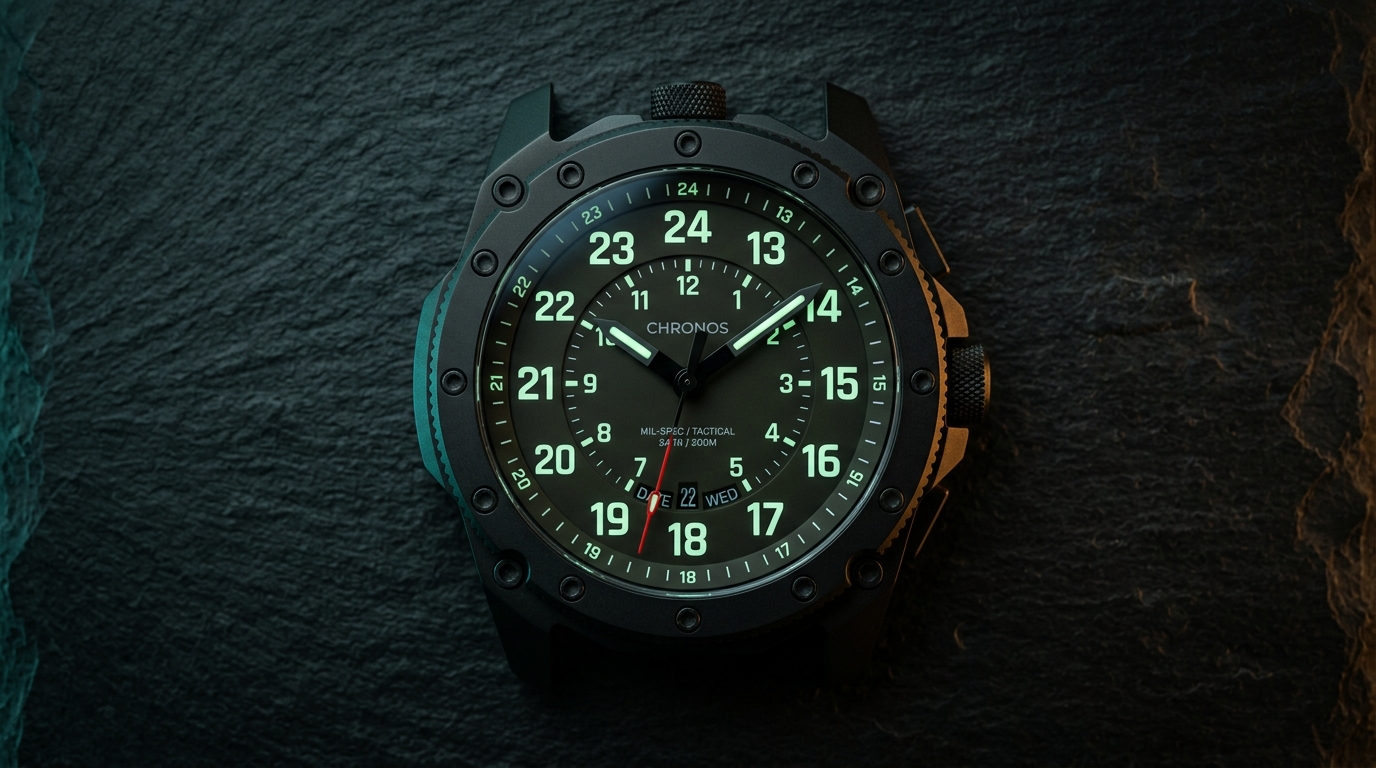
A 24-hour military time clock runs on four digits, no colon, and no a.m. or p.m. anywhere in sight.
That missing a.m./p.m. is exactly where most reading errors happen — people instinctively look for a marker that simply isn't there.
The good news: the format itself never changes. Every hour of the day gets its own unique four-digit number, with zero overlap.
Morning hours read almost exactly like civilian time. Afternoon and evening hours are where the subtract-12 and add-12 tricks actually earn their keep.
Once you can say a time out loud correctly — not just read the digits silently — the whole system clicks into fluency fast.
Here's exactly how to read it without second-guessing yourself.
What Makes This Different From Just Converting Time
Converting is math; reading is recognition. The goal here isn't running a formula every time — it's training your eye to see "1400" and instantly register "2 p.m." without a conscious conversion step in between.
The Four-Digit Format: Reading Hours and Minutes Correctly
Every time is written as four digits with no colon: the first two digits are the hour, the last two are the minutes. So 6:30 a.m. in civilian time is read simply as "zero six thirty," written 0630 — not 06:30.
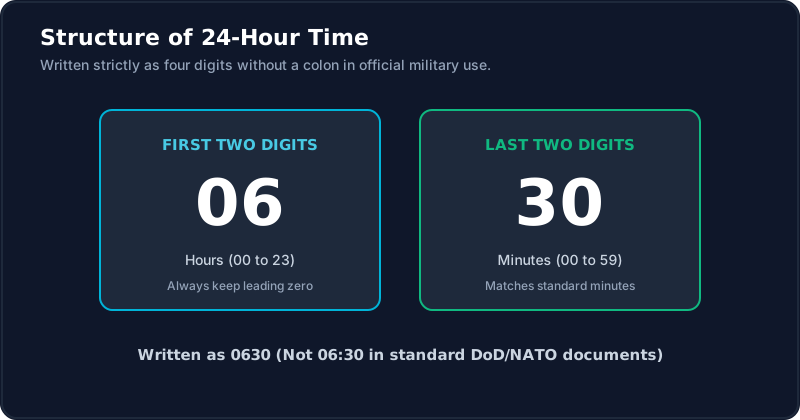
Why There's No A.M. or P.M. to Rely On
Military time eliminates the a.m./p.m. marker entirely because numbers are never reused across the day — each of the 24 hours gets exactly one number, so there's nothing left to disambiguate.
Reading Morning Hours Without Overthinking Them
Morning hours barely require any adjustment. The day starts at 0000 ("zero hundred"), and each hour after that just adds one hundred: 1 a.m. is 0100, 2 a.m. is 0200, and so on through noon at 1200.
Reading Afternoon and Evening Hours Correctly
This is where most people slow down. After noon, the numbers keep climbing instead of resetting — 1 p.m. becomes 1300, 2 p.m. becomes 1400, and the pattern continues all the way to 2359, one minute before midnight.
The Subtract-12 Trick for Fast Mental Conversion
To read an afternoon military time back into civilian terms, just subtract 12 from the hour. For 2000 hours, 20 minus 12 gives 8 — so it's 8 p.m. The same trick works in reverse: add 12 to any civilian afternoon hour to get the military equivalent.
How to Say a 24-Hour Time Out Loud Correctly
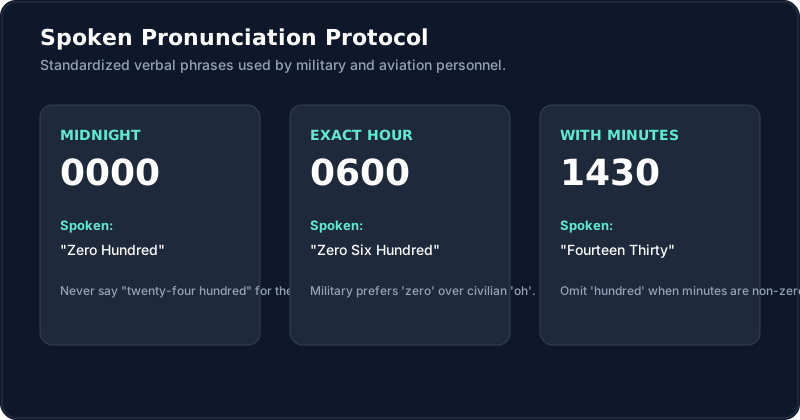
Military time is spoken, not just read. 0600 is "zero six hundred," 1430 is "fourteen thirty," and midnight, 0000, is simply "zero hundred." Saying it correctly out loud reinforces the reading fluency far faster than silently converting digits in your head.
Common Reading Errors and How to Catch Them
The most frequent mistakes are dropping the leading zero on early hours (writing "600" instead of "0600"), mentally tacking on "p.m." out of habit, and misreading 1200 as midnight instead of noon.
Full-day reference chart for practice
| 12-Hour | 24-Hour | How to Say It |
|---|---|---|
| Midnight | 0000 | Zero hundred |
| 3 a.m. | 0300 | Zero three hundred |
| 9 a.m. | 0900 | Zero nine hundred |
| Noon | 1200 | Twelve hundred |
| 3 p.m. | 1500 | Fifteen hundred |
| 9 p.m. | 2100 | Twenty-one hundred |
| 11:59 p.m. | 2359 | Twenty-three fifty-nine |
Practicing With a Full-Day Reference Chart
Keep the chart above visible and quiz yourself against it rather than deriving every number from scratch. Repetition against a fixed reference is how the pattern moves from a conscious calculation into something read on sight.
How Long It Takes to Read 24-Hour Time Fluently
Most people pick up morning hours almost immediately, since they barely differ from civilian time. The real learning curve is the afternoon and evening block — the U.S. Army itself didn't formally adopt the system until 1942, decades after the Navy, which is a reminder that even trained institutions needed real practice time to get comfortable with it.
Conclusion
Reading 24-hour time fluently comes down to two simple habits: trusting that every number stands completely on its own with no a.m. or p.m. needed, and using the subtract-12 shortcut until afternoon hours stop requiring any conscious math. Morning hours are nearly instant to read from day one. Afternoon and evening hours just take a little repetition against a reference chart before they click into place the same way.